
FIFRA Preempts State Failure-to-Warn Claims: What Monsanto v. Durnell Means for PI Practitioners
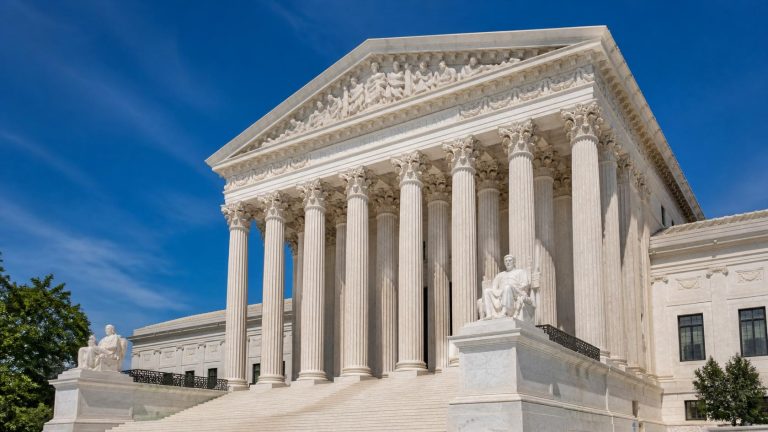
No. 24-1068 | Decided June 25, 2026 | 7-2 | U.S. Supreme Court
The Ruling
In a major 7-2 decision authored by Justice Brett Kavanaugh, the U.S. Supreme Court ruled that state-level lawsuits trying to hold Monsanto liable for failing to warn consumers about Roundup’s health risks are expressly barred by federal pesticide law.[1]
The case centered on John Durnell, a Missouri farmer who developed non-Hodgkin lymphoma after using Roundup for roughly twenty years. A Missouri jury awarded Durnell $1.25 million in 2023 on a failure-to-warn theory, a verdict that was subsequently upheld by the Missouri Court of Appeals in 2025.[2] The Supreme Court has now completely reversed that judgment.
The majority’s logic hinged entirely on Section 136v(b) of the Federal Insecticide, Fungicide, and Rodenticide Act (FIFRA), which bars states from imposing labelling requirements that are “in addition to or different from” federal standards.[3] Because the EPA has continuously registered Roundup and approved its label without requiring a cancer warning, Justice Kavanaugh wrote plainly that Durnell’s state tort claim “would require Monsanto to add a cancer warning to its labels.” He concluded that the state-law requirement is “‘in addition to’ and ‘different from’ Monsanto’s federal-law labelling obligations,” making it expressly preempted under FIFRA.”[4]
The Dissent
The lopsided 7-2 vote belies a fierce ideological divide on the bench. Justice Ketanji Brown Jackson, in a sharp dissent joined by Justice Neil Gorsuch, argued that the majority fundamentally misconstrued FIFRA and stripped injured citizens of their legal remedies.
Mr. Jackson wrote “In accepting Monsanto’s argument and holding that Durnell’s failure-to-warn claim is preempted, the Court misunderstands FIFRA’s requirements, misinterprets the scope of FIFRA’s preemption, and ultimately leaves Durnell without a remedy for the significant harms he has suffered.”[5]
Historically, state court litigation was vital in uncovering that Monsanto possessed far more data on cancer risks than it publicly disclosed. By eliminating failure-to-warn claims, the Supreme Court has removed a vital safety net that protects the public when federal oversight falls short. Because federal pesticide laws offer no financial compensation for toxic exposure injuries, state courts were historically the only venue where families could recover medical expenses, lost wages, and damages.
What the Ruling Does and Does Not Do
While this ruling is a massive blow to Roundup litigation, it does not completely shut down every legal avenue.
The decision will undoubtedly trigger the dismissal of current warning-based lawsuits and block future claims built on state failure-to-warn theories, which represent the vast majority of Roundup filings to date. However, the Supreme Court’s holding is explicitly narrow. Claims that do not rely on labelling changes, such as design defects, manufacturing defects, fraudulent advertising, or risks that the EPA never affirmatively evaluated remain legally viable.
Prominent plaintiffs’ attorney Brent Wisner, who secured the very first trial victory against Monsanto, offered a candid assessment “There is no question that failure-to-warn claims based on the EPA-approved label are over. However, the Court’s ruling was limited to just those claims. Cases will become even more difficult against pesticide manufacturers. But if they claim this is the silver bullet to end all litigation, they are just blowing sunshine.”[6]
The Settlement Dimension
This decision carries massive implications for ongoing settlement talks. In February 2026, Monsanto and class counsel announced a proposed nationwide class settlement designed to resolve existing and future non-Hodgkin lymphoma claims through a structured, long-term compensation framework. Bayer has already paid out roughly $10.9 billion to resolve earlier claims and has proposed an additional $7.25 billion nationwide settlement, which is currently pending approval before a Missouri court.
With failure-to-warn claims now off the table, this pending $7.25 billion settlement becomes a critical lifeline for plaintiffs whose primary liability theory was just wiped out. Firms representing clients in this space must immediately re-evaluate these settlement programs against whatever alternative legal theories remain in their complaints.
The Broader Preemption Warning for PI Firms
The Durnell decision stands as one of the most significant pesticide rulings in generations. It does not settle the scientific debate over glyphosate, but it draws a hard line on who has the ultimate authority to dictate product warning labels.
The ripples of this case extend far beyond Roundup. The Supreme Court’s core reasoning, that a federal agency’s approval of a label without a warning constitutes a regulatory decision that states cannot override provides a ready-made defense template. Corporate defendants will undoubtedly test this preemption argument against the FDA, the CPSC, and other federal regulatory bodies. Moving forward, every single product liability case involving a federally reviewed and approved label must be rigorously screened for preemption vulnerabilities before filing.
Legislative Pushback
The ruling sparked swift, bipartisan backlash on Capitol Hill. Democratic Senator Cory Booker announced plans to spearhead an amendment to strip away this preemptive authority, while Republican Representative Anna Paulina Luna stated she would introduce legislation to completely strip pesticide manufacturers of liability protections.
While federal legislation rarely moves quickly, the bipartisan anger is worth tracking. If Congress ultimately amends FIFRA’s preemption language, failure-to-warn claims could be legally resurrected. PI firms should structure any current Roundup settlements or dismissals with that long-term legislative possibility in mind.
[1] Monsanto Co. v. Durnell, No. 24-1068, 609 U.S. ___, slip op. at 1–2 (June 25, 2026), available at 24-1068 Monsanto v. Durnell (06/25/2026).
[2] Durnell v. Monsanto Co., 707 S.W.3d 828 (Mo. Ct. App. 2025), rev’d, No. 24-1068, 609 U.S. ___ (June 25, 2026).
[3] Federal Insecticide, Fungicide, and Rodenticide Act (FIFRA) § 24(b), 7 U.S.C. § 136v(b).
[4] Durnell, slip op. at 11, available at https://www.supremecourt.gov/opinions/25pdf/24-1068_n7ip.pdf.
[5] Durnell, slip op. at 2 (Jackson, J., dissenting).
[6] Carey Gillam, Supreme Court decision on Roundup lawsuits not a “silver bullet” for pesticide makers, legal experts say, The New Lede (June 26, 2026), The New Lede Article Link.