
Ethylene Oxide Exposure Litigation: Medical Risks Driving Emerging Mass Tort & MDL Cases
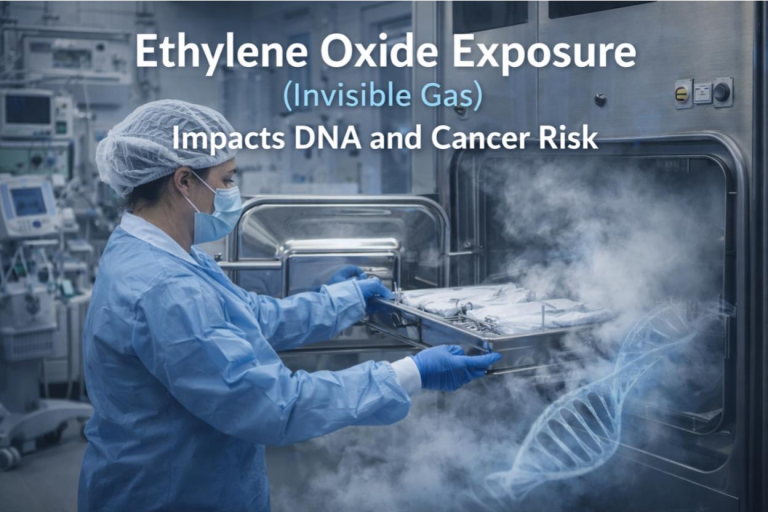
Ethylene oxide (EtO) is a widely used industrial chemical primarily employed for sterilizing medical equipment and manufacturing products such as antifreeze, detergents, plastics, and solvents. While EtO plays a critical role in infection prevention, long-term inhalation exposure has raised serious public health and legal concerns, driving the emergence of mass tort litigation and potential MDL actions.
Communities located near EtO-emitting sterilization plants and industrial facilities have become the focus of environmental exposure claims due to chronic, low-level exposure risks.

Why Ethylene Oxide Is Medically and Legally Significant
The U.S. Environmental Protection Agency (EPA) classifies ethylene oxide as a human carcinogen via inhalation exposure. Once inhaled, EtO can enter the bloodstream and damage DNA through alkylation, interfering with normal cell repair and replication. This mechanism is associated with an elevated risk of cancer over time, particularly after prolonged exposure and latency periods.
Documented Health Risks of EtO Exposure
Acute Effects
- Neurological symptoms (nausea, vomiting, dizziness)
- Eye, skin, and respiratory irritation
- Pulmonary complications including bronchitis and edema
Chronic Non-Cancer Effects
- Nervous system impacts (memory loss, headaches, numbness)
- Persistent respiratory irritation
- Skin and mucous membrane sensitivity
Reproductive & Developmental Concerns
- Reported increased miscarriage rates among exposed workers
- Reproductive toxicity observed in animal studies
Cancer Risks Linked to EtO Exposure
Human occupational and epidemiological studies have reported increased incidence of:
- Lymphoid cancers
- Leukemia
- Multiple myeloma
- Breast cancer (in female populations)
Animal inhalation studies further indicate elevated tumor risks in the brain, lungs, uterus, connective tissue, and mammary glands.

Latency, Duration, and Exposure History Matter in EtO Claims
A defining feature of ethylene oxide mass tort litigation is the long latency period, often spanning years or decades between exposure and cancer diagnosis.
Key claim-evaluation factors include:
- Proximity to EtO-emitting facilities
- Length of residence or employment in exposure zones
- Cumulative exposure duration
- Time interval between exposure and disease onset
- Alternative cancer risk factors

How EtO Exposure Is Proven in Litigation
Direct medical documentation of EtO exposure is uncommon. Instead, exposure is typically established through:
- Residential and occupational history
- Environmental monitoring records
- EPA and regulatory emission reports
- Facility operating histories
- Geographic exposure mapping
- Medical timelines and oncology records
This makes structured medical review, exposure reconstruction, and case chronology essential in screening and developing viable claims.

Why EtO MDL & Mass Tort Cases Require Advanced Medical Record Review
Ethylene oxide litigation presents unique challenges:
- Exposure is environmental and indirect
- Disease onset occurs long after exposure
- Medical records rarely reference EtO explicitly
- Cancer causation requires risk factor analysis and timeline validation
For MDL attorneys, accurate medical summarization, oncology record review, and exposure correlation are critical to building defensible cases.

How Draft n Craft Supports EtO Mass Tort & MDL Litigation
Draft n Craft provides specialized legal outsourcing and medico-legal support for attorneys handling ethylene oxide exposure claims, including:
- Medical record review & oncology summarization
- Exposure timeline mapping & case chronologies
- Plaintiff screening & intake analysis
- MDL-ready case summaries & demand narratives
- Regulatory research & facility exposure documentation
- Litigation-ready medical insights for settlement and trial strategy
Our legal and medico-legal teams help MDL firms scale EtO dockets efficiently while maintaining accuracy, defensibility, and litigation strength.

Conclusion: EtO Litigation Sits at the Crossroads of Science, Medicine & Mass Torts
Ethylene oxide exposure cases require a clear understanding of toxicology, latency periods, cancer risk profiles, and exposure documentation. For mass tort and MDL attorneys, rigorous medical analysis and structured record review remain essential for responsible case evaluation and litigation success.
Explore – https://www.draftncraft.com/medico-legal-services/