
UNDERSTANDING “FAILURE TO WARN” IN MASS TORTS: WHAT MAKES A STRONG CASE?
“Failure to warn” (also referred to as a failure to provide adequate warnings, marketing warnings, labeling warnings, postmarket risk disclosures, etc.) is one of the core claims in mass torts. A strong failuretowarn case depends on satisfying several legal elements. The cases show what courts are focusing on: whether there was duty, whether the warning was deficient, whether causation can be established, and how preemption and regulatory law impact these claims.
Broadly, in U.S. law, a plaintiff must prove each of:
- Duty to warn: Manufacturer’s legal obligation to warn about risks, which may arise from regulatory regimes, its own knowledge, postmarket surveillance, etc.1
- Knowledge / “newly acquired information”: Manufacturer’s awareness of the known risk. This would also include manufacturer’s knowledge of the “newly acquired information” that can include either new data or new analyses of previously submitted data. See 21 C.F.R. §314.3(b)
For instance, the knowledge or knowability requirement holds a drug manufacturer to the standard of “knowledge and skill of an expert in the field,” and further obligates the manufacturer “to keep abreast of any scientific discoveries” and to “know the results of all such advances.”2 The manufacturer’s knowledge “must exist at the time of distribution.”3 ” [S]ubsequently developed scientific data [is not] controlling.”4
- Deficiency of warning: This refers to any lacking in the warning (that did not mention a risk, or mentioned it but downplayed it, or did not reach users/intermediaries, or bore a faulty label design, etc.). To establish that the product was defective, the plaintiff must show that a warning of a particular product was either inadequate or altogether lacking, and that this deficiency in warning made the product ‘unreasonably dangerous.’” Twigg v. Varsity Brands Holding Co. 4:23-CV-00067 (Mar 7, 2025) (citing Phillips v. A Best Prods. Co., 665 A.2d 1167, 1171 (Pa. 1995)).
- Causation: With respect to:
a. Warning causation: “a plaintiff may satisfy the burden of demonstrating warning causation by producing either objective evidence of how a reasonable physician would have responded to an adequate warning, or subjective evidence of how the treating physician would have responded.” See Corder v. Ethicon, Inc. 473 F. Supp. 3d 749 (Jul 21, 2020) (citing Ackermann v. Wyeth Pharm., 526 F.3d 203, 212 (5th Cir. 2008))
b. Injury causation: That the injury was in fact caused by the risk that should have been warned of.
- Foreseeability / proximate cause: A reasonably foreseeable risk; or a link between knowledge and harm.
- Regulatory compliance / preemption: If the product is regulated (such as drugs, devices), this is often central—whether statelaw failuretowarn claims are preempted if the labeling is FDA approved, and whether the product could lawfully have adopted a stronger warning.
Recent Case Authorities & Legal Developments (AugSept 2025 / mid2025 trends relevant at present) keeping up with the “Failure to warn” elements
The ongoing mass torts and recent rulings illustrate how courts are treating these elements. Here are key examples or trends:
- Johnson & Johnson Talc Litigation
In J&J Talcum Powder Products Marketing, Sales Practices and Products Liability Litigation (MDL No. 3:16md02738), a recent Massachusetts state court jury awarded $42.6 million in a mesothelioma case (Paul Lovell) in August 2025, finding design defects and failure to warn among the contributing factors.
This illustrates that when plaintiffs can show that a manufacturer knew (or should have known) of risk (e.g., talc containing asbestos), and failed to warn consumers, large verdicts remain possible even where regulatory oversight is substantial.
- DepoProvera & Paragard IUD
In IN RE: DepoProvera Products Liability Litigation (MDL No. 3:25md03140), plaintiffs alleged that the manufacturer (Pfizer) failed to adequately warn of risks of longterm use (e.g. bone density loss, risk of meningiomas) and that labeling in the U.S. lags behind warnings in other jurisdictions.
On the other hand, in In Re: Paragard IUD Products Liability Litigation (MDL No. 2974), plaintiffs claimed that although FDA approved label included warning of breakage during removal, the warnings remain vague about complications like infertility or organ damage. Discovery is active and bellwether trials are upcoming in 2026.
These cases show that plaintiffs frequently assert that warnings were either inadequate or obscure, even where there has been some regulatory action (e.g. past label changes or adverse event reports).
- Preemption and “Newly Acquired Information” Defense
A major defense in pharmaceutical and medical device failuretowarn cases is that the defendant lacked authority, under regulation, to change warnings unless “newly acquired information” is demonstrated.
In Warner v. Amgen Inc., 1:24-cv-10632-JEK (D. Mass. Feb. 13, 2025), the plaintiffs alleged preapproval failure to warn (about individuals excluded from clinical trials) and postapproval claims. The court held the Federal Food, Drug, and Cosmetic Act (FDCA) preempts statelaw failuretowarn claims when the FDA was aware of what plaintiffs’ claim should have been warned of, or the postapproval evidence does not qualify as “newly acquired information” under the relevant CBE (Changes Being Effected) regulation.
If in late 2025 there are cases reinforcing or applying this standard more strictly, then this significantly raises the bar for plaintiffs in mass tort settings.
- Learned Intermediary Doctrine and “Heeding Presumption”
In In re BioZorb Device Products Liability Litigation, Civil Action No. 1:22-cv-11895-ADB (D. Mass. Feb. 3, 2025)5, the court granted summary judgment for failure to warn because under Massachusetts / applicable law (via choiceoflaw), the learned intermediary doctrine applies, and more importantly, Colorado law does not recognize a “heeding presumption”. The plaintiff failed to produce testimony (e.g. surgeon’s deposition) that a stronger warning would have changed the surgeon’s decision. Thus, warning causation failed.
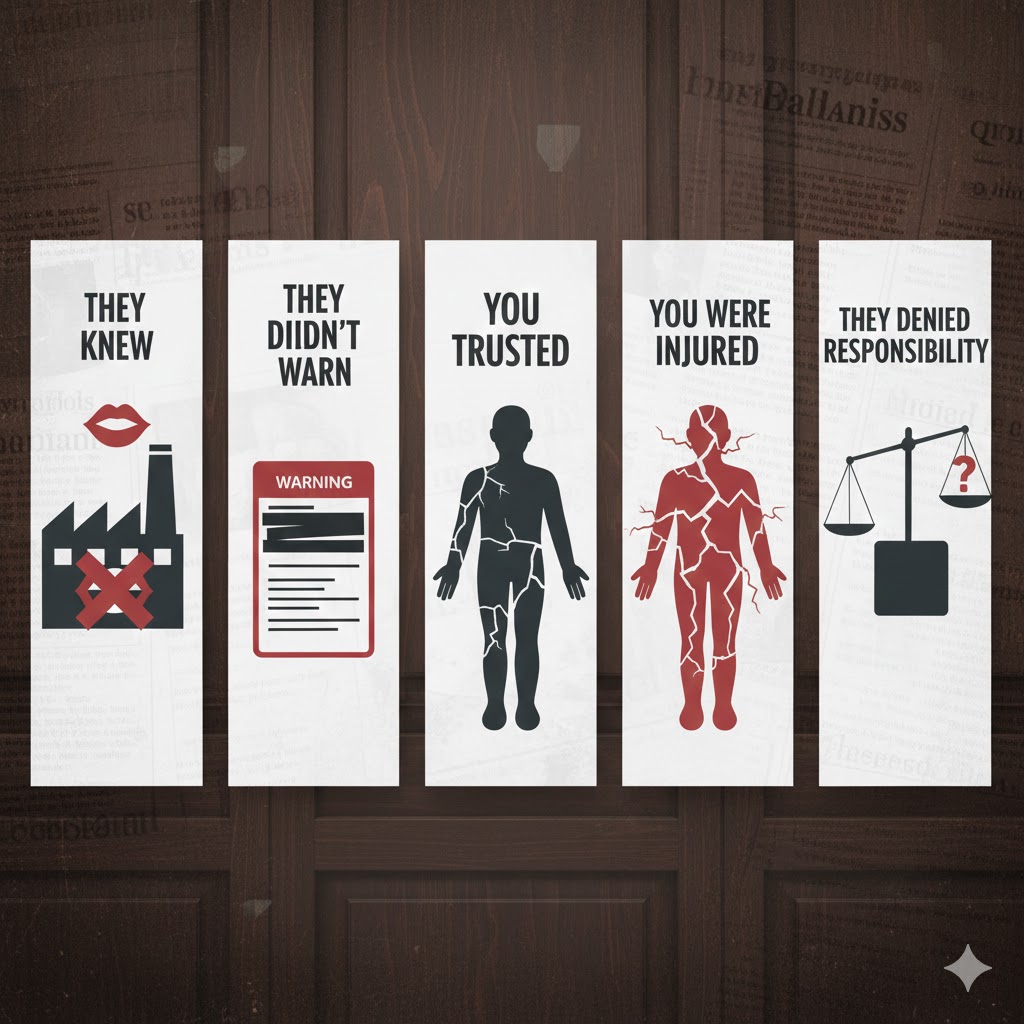
This shows that in many jurisdictions, plaintiffs cannot rely on an assumption that warning would have been heeded; they need affirmative proof (often expert or by deposition) that a different or more specific warning would have changed behavior.
Ultimately, a strong “failure to warn” case in mass tort litigation depends on proving that the manufacturer knew or should have known about a risk, failed to provide adequate warnings, and that this failure directly caused harm. Courts increasingly focus on whether the manufacturer had timely knowledge—especially through “newly acquired information”—and whether the warning was legally and scientifically sufficient. Recent rulings show that plaintiffs must overcome hurdles like regulatory preemption, the learned intermediary doctrine, and the need for concrete evidence of causation. Success requires clear, well-supported arguments that tie deficient warnings to foreseeable and preventable injuries.
Related Content