
The AI Tools Every Attorney Should Be Using Right Now (And Exactly What They’re Good For)
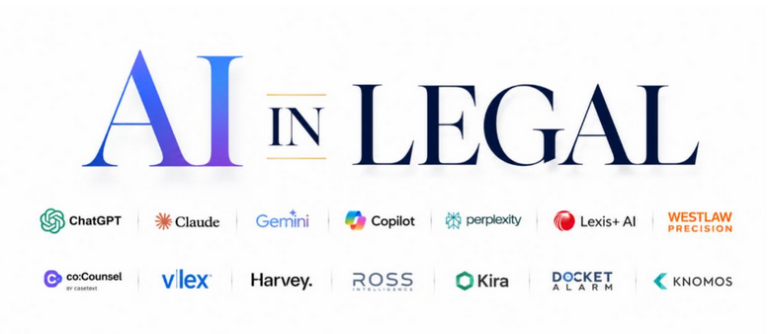
The legal industry is finally at a point where AI is no longer a “future concept” or a shiny tech experiment. It is already reshaping how attorneys research, draft, review, prepare for litigation, manage discovery, and even communicate with clients. The truth is simple. Some lawyers are still treating AI like a risky toy. Others are quietly using it like a private associate that never sleeps. The difference between the two is not talent. It is awareness. Because once you know which AI tools exist in the market and what they actually do, it becomes hard to justify doing everything manually like it’s still 2012.
The real opportunity for attorneys is not using AI to “replace legal thinking.” That is impossible. The real win is using AI to eliminate low-value time drains, reduce repetitive drafting work, speed up review cycles, and improve accuracy across everyday workflows. Attorneys who adopt the right tools early are already billing smarter, not longer. And they’re doing it without compromising legal judgment.
Let’s break down the most relevant AI tools in the legal market today, what they are best at, and why every attorney should have them in their arsenal.
1. ChatGPT (OpenAI) – The Most Powerful Drafting and Brainstorming Partner
ChatGPT has become the default entry point for attorneys into AI, and for good reason. It is one of the most versatile tools in the world for legal writing assistance, issue spotting, structuring arguments, summarizing facts, and simplifying complex legal concepts.
Attorneys are using ChatGPT to draft first versions of motions, demand letters, deposition outlines, interrogatories, and client-facing explanations. It is especially effective when you already know what you want to say, but you want to say it faster and cleaner. It can also help attorneys convert messy notes into polished legal writing, build litigation timelines from scattered facts, and prepare witness questioning themes.
The biggest advantage is speed. A good attorney with a good prompt can produce in 30 minutes what used to take 3 hours. But the real power is not drafting. It’s refinement. ChatGPT makes it easier to improve tone, strengthen logic, tighten language, and eliminate fluff. It is not a replacement for legal review. It is the fastest first draft generator the legal industry has ever seen.
2. Claude (Anthropic) – The Best Tool for Long Documents and Contract Review Thinking
Claude is quietly becoming the favorite tool of attorneys who deal with heavy document loads. It handles long PDFs, long agreements, lengthy pleadings, and multi-page discovery responses with impressive comprehension. If ChatGPT feels like a brilliant associate, Claude feels like a careful senior analyst who can read 100 pages without losing context.
Claude is excellent for summarizing contracts, pulling key obligations, identifying risky clauses, and explaining what a document actually means in plain English. Attorneys also use it for document-to-document comparison, spotting inconsistencies between two versions of an agreement, and extracting key dates, termination provisions, indemnity obligations, and payment terms.
For corporate attorneys, this is where Claude becomes extremely valuable. It can reduce contract review time dramatically. For litigation attorneys, it can summarize lengthy pleadings, expert reports, and deposition transcripts in a way that makes prep easier and faster.
3. CoCounsel (Thomson Reuters) – AI Built Specifically for Lawyers
CoCounsel is one of the most “legal-native” AI products available. It is designed for real legal workflows rather than general writing tasks. It helps attorneys perform litigation prep tasks like reviewing discovery, summarizing depositions, identifying key facts, drafting correspondence, and organizing case information.
The reason this matters is because generic AI tools require more supervision and better prompting. Legal-focused AI tools like CoCounsel are designed around attorney expectations. That means they are more structured and purpose-built for litigation and law firm tasks. Attorneys using CoCounsel are often able to speed up routine work like summarizing case documents, preparing briefs, and organizing evidence for trial.
If you are a litigation attorney and you want an AI tool that feels closer to an actual legal assistant than a generic chatbot, CoCounsel is one of the most relevant options in the market.
4. Westlaw Precision AI and Lexis+ AI: The Future of Legal Research
Legal research is one of the most expensive time drains in law practice. Not because attorneys cannot research, but because research requires time to dig, filter, validate, cross-check, and confirm citations. That is exactly where legal research AI tools are changing the game.
Westlaw Precision AI and Lexis+ AI are built into the platforms attorneys already trust. They help lawyers find cases faster, summarize holdings, identify relevant authority, and draft research-driven answers more efficiently. The most important point is this. These tools are not meant to eliminate traditional research. They are meant to shorten the path to the right authority.
Instead of spending 90 minutes searching across multiple queries, attorneys can get relevant case lists quickly, refine faster, and spend their time analyzing rather than hunting. For attorneys handling motion practice, appellate work, employment law, civil litigation, and complex tort cases, these tools are not optional anymore. They are becoming the baseline for competitive practice.
5. Harvey AI: High-End AI for Big Law Style Work
Harvey is one of the most talked-about legal AI tools in the premium market. It is used heavily by large firms and corporate legal departments. Harvey is designed for complex drafting, regulatory analysis, contract review, and sophisticated legal workflows.
The reason Harvey stands out is because it is built around legal reasoning style output rather than generic writing. It is the kind of tool that supports attorneys working on high-stakes matters where precision and structure matter.
If your practice involves corporate transactions, compliance, or large-scale litigation strategy, Harvey is one of the strongest AI platforms currently available.
6. Spellbook: AI Contract Drafting and Clause Generation for Transactional Lawyers
Spellbook is essentially AI designed for contract lawyers. It integrates into Microsoft Word and helps attorneys draft clauses, suggest alternative language, identify missing provisions, and review contract risks. Instead of manually pulling clause templates from old agreements, attorneys can use Spellbook to generate clause options instantly.
This is particularly useful for attorneys handling NDAs, service agreements, employment agreements, vendor contracts, licensing terms, and purchase agreements. Spellbook speeds up contract drafting dramatically, but more importantly, it helps attorneys avoid missing key clauses that often get overlooked in routine drafting.
Transactional lawyers who don’t adopt tools like this are basically choosing to draft with one hand tied behind their back.
7. Luminance: AI-Powered Contract Review and Due Diligence
Luminance is a strong AI platform used for contract analysis, due diligence, and high-volume document review. It is especially useful for M&A teams and corporate law firms handling large-scale contract sets.
Instead of reviewing hundreds of contracts manually during due diligence, attorneys can use Luminance to identify patterns, highlight anomalies, flag missing clauses, and classify agreements based on risk. This tool is built for speed and scale.
If you are doing due diligence or contract portfolio analysis, this is the type of AI that can save entire weeks of work.
8. Relativity and Everlaw: AI for Discovery and Document Review
Litigation is drowning in documents. Emails, PDFs, spreadsheets, chats, call logs, internal memos, and Slack threads. Discovery is no longer about reading everything. It’s about finding what matters faster than the other side.
Relativity and Everlaw are two major platforms in eDiscovery, and both have implemented AI-driven workflows for document review, categorization, relevance detection, and prioritization. These tools help attorneys and review teams reduce review time, identify key documents faster, and manage production efficiently.
This is the backbone of modern litigation. Any attorney who thinks discovery is still a manual process is not operating in today’s legal world.
9. Blue J: AI for Tax Research and Tax Litigation
For attorneys dealing in tax law, Blue J is one of the most impressive niche AI tools. It uses predictive analysis to help attorneys assess how courts might interpret tax issues based on prior outcomes. It is essentially a tool designed to improve research clarity and legal prediction in tax matters.
For tax attorneys, Blue J is a major advantage because it helps reduce uncertainty and speeds up complex research tasks that normally take hours.
10. CaseText (Now Part of Thomson Reuters): Research and Brief Drafting Assistance
Before being acquired, CaseText became famous for helping attorneys find relevant cases and build research-driven arguments faster. Its research assistant capabilities were built to support motion practice and litigation writing. While its functionality is evolving under Thomson Reuters, the concept remains important.
Tools like this show where the legal industry is going. Research is no longer about who can search better. It is about who can interpret faster and write cleaner.
11. Otter.ai and Fireflies.ai: AI Transcription for Depositions, Meetings, and Client Calls
Attorneys waste massive time taking notes. Not because note-taking is bad, but because it is inefficient. AI transcription tools like Otter.ai and Fireflies.ai can record meetings, transcribe them, summarize action points, and pull key statements.
For litigation attorneys, this is valuable for internal strategy calls, client interviews, witness preparation, and team meetings. For corporate attorneys, it helps with negotiations and stakeholder calls.
The advantage is not just transcription. It is searchable conversation history. Imagine being able to instantly search every client call for the phrase “timeline” or “they admitted” or “termination.” That is what these tools enable.
12. Microsoft Copilot: The Most Underestimated AI Tool in Law Firms
Microsoft Copilot is becoming a hidden powerhouse because it works directly inside Word, Outlook, Excel, and Teams. That means it’s not a separate AI tool. It becomes part of the lawyer’s daily environment.
Copilot can summarize email threads, draft client emails, rewrite documents, create meeting notes, prepare Excel analysis, and generate internal reports. For law firms, this is extremely important because the real time drain is not always legal research. It is administrative overload. Copilot reduces that workload in a way attorneys feel immediately.
The firms adopting Copilot are basically turning Microsoft Office into an AI-powered legal workstation.
13. Grammarly: The AI Tool Attorneys Don’t Respect Enough
Grammarly is not “just grammar.” It is an AI writing assistant that improves clarity, tone, professionalism, and conciseness. Attorneys who draft constantly often overlook how much credibility is lost through messy writing.
Grammarly catches errors that attorneys miss when they’re rushing. It improves sentence structure and tone. It helps attorneys sound sharp, authoritative, and precise. And in law, writing is reputation. Every email, every letter, every motion reflects the attorney’s brand.
Grammarly is one of the simplest tools that produces immediate results.
14. Legal Document Automation Tools: Clio, Smokeball, PracticePanther
While not “AI tools” in the chatbot sense, modern practice management platforms now integrate AI features such as intake automation, billing automation, template drafting, and workflow reminders. Clio, Smokeball, and PracticePanther help attorneys manage cases without drowning in administrative chaos.
The law firm that automates scheduling, client intake, document generation, and billing gains something more valuable than time. It gains mental bandwidth.
And mental bandwidth is what attorneys need to win cases.
The Real Truth: AI Doesn’t Replace Attorneys. It Exposes Inefficiency.
This is the uncomfortable part of the conversation. AI is not replacing lawyers. It is replacing waste. It is replacing the attorney who insists on doing repetitive work manually because “that’s how it’s always been done.” It is replacing the firm culture that treats overwork like a badge of honor.
AI is a mirror. It shows attorneys exactly where their time is being wasted. It shows which parts of the job are truly strategic and which parts are just paperwork disguised as professionalism.
The firms that adopt AI are not becoming lazy. They are becoming lethal. They are spending more time on case strategy, client trust, negotiation leverage, and courtroom readiness. They are producing faster work product, cleaner drafts, and stronger arguments. Not because AI is smarter than them. But because AI is eliminating the friction that slows them down.
The Smart Way to Use AI as an Attorney (Without Risking Credibility)
The attorneys winning with AI are not using it blindly. They are using it as a first draft tool, a summarization assistant, a research accelerator, and a review partner. But they still do the final legal reasoning themselves. They still verify citations. They still apply jurisdiction-specific law. They still exercise judgment.
Because that is what clients pay for. Clients don’t pay for typing. They pay for thinking.
AI just removes the unnecessary struggle that surrounds the thinking.
Final Word: If You’re Not Using AI in Law, You’re Not “Traditional.” You’re Slower.
In the next few years, legal clients will stop asking if you use AI. They will assume you do. And they will quietly choose the firm that delivers faster results, better communication, and cleaner work product.
The attorneys who adopt AI tools now are building a future-proof practice. The ones who refuse will still be busy, still be exhausted, and still be billing hours. But they will be losing ground to attorneys who are doing the same work in half the time.
AI is not a trend. It is the new baseline.
And the attorneys who understand that early will not just survive the next decade.
They will dominate it.