Camp Lejeune water contamination: A Comprehensive Legal Analysis for Law Firms Handling Toxic Exposure Claims
Environmental mass torts often unfold over decades. Few, however, have required Congress to intervene directly to reopen the courthouse doors. The Camp Lejeune water contamination matter stands as one of the most significant federally legislated toxic exposure frameworks in modern U.S. legal history.
For law firms navigating this landscape, the case demands far more than intake volume it requires disciplined statutory interpretation, scientific literacy, and operational precision.

I. Historical Context: The Contamination Period (1953–1987)
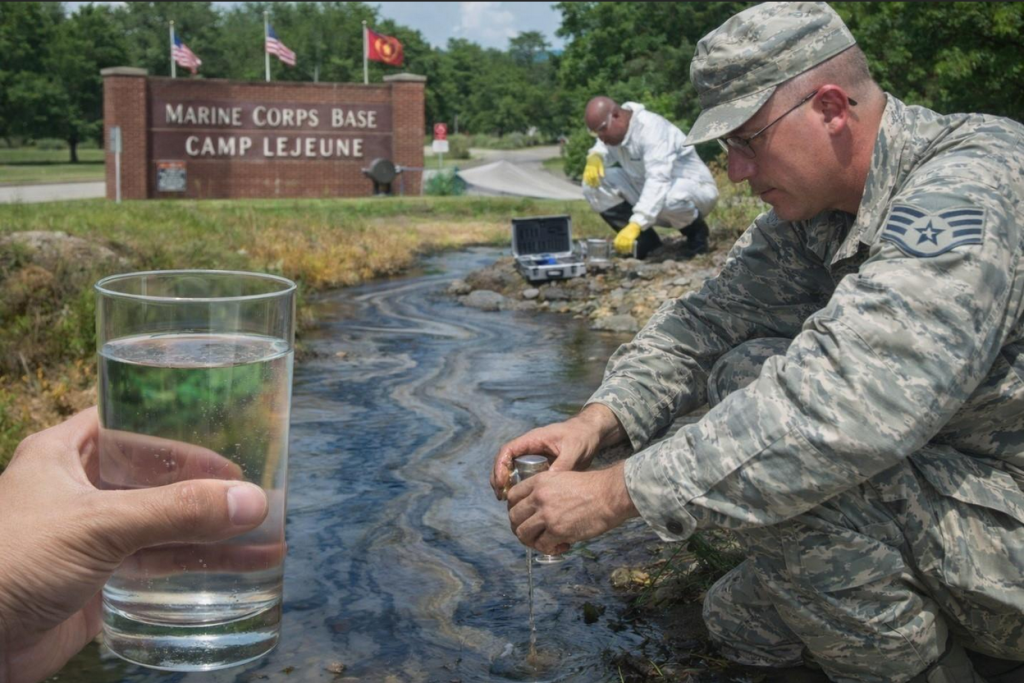
Between 1953 and 1987, individuals residing or working at Marine Corps Base Camp Lejeune were exposed to drinking water contaminated with volatile organic compounds (VOCs), including:
- Trichloroethylene (TCE)
- Tetrachloroethylene (PCE)
- Benzene
- Vinyl chloride
Investigations later revealed contamination within specific base water systems, including Tarawa Terrace and Hadnot Point. Retrospective exposure reconstruction and toxicological assessments conducted by the Agency for Toxic Substances and Disease Registry have formed the scientific backbone of current claims.
For legal practitioners, the contamination history is not speculative it is documented. The litigation focus now centers on disease linkage, exposure duration, and statutory interpretation under federal law.

II. The Statutory Framework: A Unique Federal Cause of Action
Claims arising from Camp Lejeune exposure are governed by the Camp Lejeune Justice Act of 2022, enacted as part of the Honoring our PACT Act of 2022.
The Act created a limited federal cause of action with several defining characteristics:
- Jurisdiction exclusively in the U.S. District Court for the Eastern District of North Carolina
- A minimum 30-day exposure requirement during 1953–1987
- Mandatory administrative claim submission prior to litigation
- Abrogation of North Carolina’s statute of repose for these claims
Most notably, the statute carved out an exception to traditional sovereign immunity defenses that had historically barred recovery.
The statutory window for filing new claims closed in August 2024. Current matters now revolve around administrative resolution, negotiated settlements, and federal court proceedings.

III. Administrative Claims and Litigation Progress
1. Administrative Exhaustion
Before filing suit, claimants were required to submit claims to the Department of the Navy. The volume of submissions was substantial, creating procedural backlog and structured review phases.
An “Elective Option” settlement pathway was introduced for certain qualifying diagnoses, offering standardized compensation tiers. Claimants may accept these offers or proceed to litigation.
2. Federal Court Coordination
All lawsuits are centralized in the Eastern District of North Carolina. The court has implemented coordinated case management orders addressing:
- Expert disclosures
- Discovery sequencing
- Water modeling admissibility
- Selection of early representative trials
The court’s phased approach is expected to shape broader settlement valuation benchmarks.

IV. The Core Legal Battle: Causation
The most consequential disputes are evidentiary.
Law firms must establish:
- Qualifying presence at Camp Lejeune for at least 30 days during the statutory period
- Diagnosis of a condition plausibly associated with VOC exposure
- A legally sufficient causal nexus between exposure and injury
The government has indicated it will rigorously scrutinize:
- Reliance on ATSDR modeling
- General versus specific causation testimony
- Latency period analyses
- Dose reconstruction methodologies
This litigation may ultimately refine how federal courts assess epidemiological evidence in statutory toxic exposure cases distinct from traditional Federal Tort Claims Act claims.

V. Damages and Offsets
The Act permits recovery of compensatory damages, including:
- Medical expenses (past and future)
- Pain and suffering
- Disability-related losses
- Wrongful death damages
VA disability benefits may factor into offset analyses. Careful coordination between tort recovery and federal benefits is essential to prevent duplication or improper reduction disputes.
Each claim is individually assessed — this is not a class action model. Valuation hinges on diagnosis, evidentiary strength, exposure duration, and litigation posture.

VI. Operational Realities for Law Firms
Handling Camp Lejeune claims at scale requires infrastructure:
- High-volume medical record review
- Service record verification
- Chronological exposure mapping
- Expert-ready documentation packages
- Secure data management systems
Given the volume of national advertising and public outreach surrounding these claims, firms must maintain rigorous screening protocols and transparent client communication standards.
The reputational stakes are significant.

VII. Broader Legal Significance
Camp Lejeune represents more than compensation litigation. It signals:
- Congressional willingness to reopen historic toxic exposure claims
- A centralized federal venue model for government-linked environmental harm
- A legislative template that could influence future exposure frameworks
The precedent it sets procedurally and substantively may reverberate in future environmental and military base exposure cases.

How Draft n Craft Strengthens Law Firm Capacity in Camp Lejeune Matters
| Service Area | What We Do | Strategic Value to Law Firms | Litigation Impact |
| Medical Record Summarization | Indexed medical summaries aligned with exposure timelines and statutory criteria | Reduces attorney review time and improves causation presentation | Stronger expert prep & cleaner damages narratives |
| Exposure & Service Documentation Analysis | Verification of qualifying presence, residence reconstruction, evidentiary packaging | Ensures statutory compliance and minimizes eligibility risk | Strengthens foundational liability proof |
| Administrative Claim Preparation Support | Structured claim documentation formatted per Department of Navy protocols | Prevents procedural errors and accelerates processing | Reduces rejection risk and preserves litigation leverage |
| Litigation Support & Expert Coordination | Organized exhibits, deposition bundles, indexed records for experts | Streamlines discovery and expert review workflows | Improves courtroom readiness and settlement positioning |
Explore – https://www.draftncraft.com/mass-tort-support-solution/