
The billing conversation no one teaches you in law school
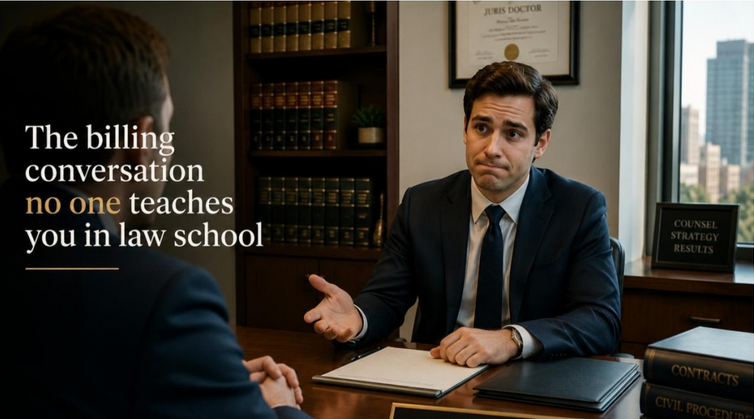
How to talk about money with clients from the first call to the final invoice without damaging trust or leaving fees on the table.
10 min read · Billing and Client Relations
The motion went well. The client called, grateful. Two days later, the invoice went out. By Friday, there was a blunt email questioning a $400 charge for “correspondence review.”
Nothing changed about the work. But the relationship did.
This is the billing paradox no one trains lawyers for. You are taught how to argue and persuade, but not how to discuss fees without sounding defensive, uncertain, or negotiable.
Handled badly, billing conversations create more damage than most legal mistakes. Fee disputes remain one of the most common triggers for bar complaints. Not malpractice, not missed deadlines, but billing friction.
The solution is not charging less. It is communicating better.
Below are five billing triggers where attorneys either protect trust or unintentionally destroy it.
WHY THIS IS HARD
Law school taught law, not the business of law
Legal education covers doctrine in depth, but rarely prepares attorneys for the operational reality of practice. Quoting fees, managing expectations, handling pushback, and raising rates.
That gap creates a pattern. Some lawyers avoid money conversations entirely. Others over explain and hedge. Both approaches make clients feel like the bill is uncertain, which quickly becomes doubt about value.
The lawyers with the fewest disputes are not the cheapest. They are the clearest.
BILLING TRIGGER 1
The intake call: never quote before you understand the matter
A prospective client asks, “What will this cost?” Many attorneys answer too quickly.
The problem is simple. Any number you give early becomes an anchor. Every future invoice will be judged against it, even if the case turns out to be more complex than expected.
Instead, qualify first. Ask questions. Then provide a range tied to variables.
Script:
“Before I give you a number that may not be accurate, let me ask you a few questions about the situation. Once I understand the scope, I can give you a realistic range and explain what would push it toward the higher or lower end.”
BILLING TRIGGER 2
The engagement letter: your most underused billing tool
Most attorneys treat the engagement letter as a formality. It is not. It is the strongest billing control document in the entire relationship.
Most letters cover the basics. Scope, rate, billing cycle. But they ignore what clients actually care about. What happens when scope expands, how additional work gets approved, what communication looks like, and how billing disputes are handled.
The simplest fix is to clearly state that scope may expand and explain how the client will be notified.
Even better, do not just send the letter. Walk through the billing section verbally.
Script:
“I want to take two minutes to walk through the billing section before you sign. When clients understand this upfront, we almost never have issues later. We bill monthly, you will receive an itemized invoice, and if anything changes that meaningfully affects cost, I will call you before we do the work, not after.”
BILLING TRIGGER 3
Scope creep: the call you make before the work, not after
Most billing disputes are not about price. They are about surprise.
A matter expands. New issues appear. Opposing counsel becomes aggressive. The attorney keeps working. The client keeps receiving invoices. Then comes the bill that is far higher than expected.
Clients can accept unexpected costs. They cannot accept being blindsided.
If a development will add significant fees, call before proceeding.
Script:
“I wanted to call before this shows up on your invoice. A new issue has come up, and handling it properly will likely add around [amount]. My recommendation is [X], but I want your input before we move forward.”
BILLING TRIGGER 4
Invoice pushback: two types of disputes and how to handle both
When a client questions a charge, many attorneys either defend immediately or discount immediately. Both are mistakes.
First identify what is happening.
Sometimes the client does not understand what the line item covers. That is usually solved with a clear explanation.
Other times the client understands perfectly well and simply does not want to pay. That requires calm firmness.
Script:
“I appreciate you raising this. That entry covers [specific work] on [date], which took [time] because [reason tied to the matter]. What part of it specifically felt unclear or unexpected?”
That final question forces specificity and reveals whether the issue is confusion or resistance.
Adjust fees only when justified. Billing errors, poor expectation setting, or strategic goodwill. Do not discount as a default response, because it trains clients to negotiate every invoice.
BILLING TRIGGER 5
Rate increases: the conversation that pays compound interest
Avoiding rate increases is one of the most expensive habits in law practice.
If you do not raise rates, inflation alone cuts your real income every year. Over time, that becomes a silent pay cut.
The clients most likely to leave over a rate increase are usually the least profitable. Strong clients stay when the change is communicated professionally.
Best practice is simple. Give advance notice, communicate in writing, and frame it confidently.
Script:
“As we move into [year], my hourly rate will adjust to [new rate], effective [date]. This reflects the depth of experience I bring to these matters and the quality of work I am committed to providing. I value our working relationship and wanted to give you advance notice. Please feel free to reach out if you would like to discuss.”
THE MINDSET SHIFT
Billing transparency is client service
The best attorneys do not treat billing conversations like conflict. They treat them like professional care.
Clear intake communication prevents misunderstanding. Scope calls prevent resentment. Strong invoice explanations prevent disputes. Rate increases protect sustainability.
Clients rarely fight bills when they understand what they are paying for and trust that their costs are being managed responsibly.
Pick the one billing conversation you have been avoiding and have it this week.
Because in most practices, the biggest revenue leak is not unpaid invoices.
It is unspoken expectations.
Related Content