L’Oréal, Revlon, Dabur, and Strength of Nature Are Facing Thousands of Cancer Claims — Inside Hair Relaxer MDL No. 3060
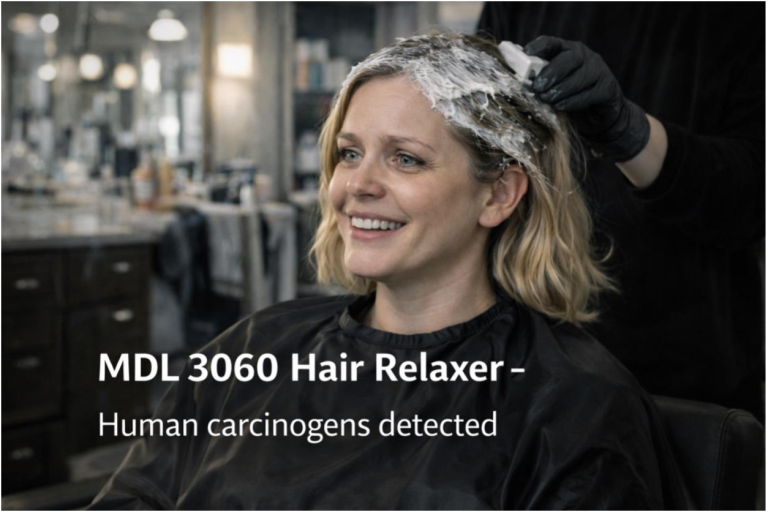
A hair relaxer is a chemical cream or lotion, often containing strong agents like sodium hydroxide (lye) or ammonium thioglycolate, used to permanently straighten curly or coiled hair. It works by breaking down the disulfide bonds in the hair shaft, reducing its natural texture to achieve a smooth, straight look.
Global beauty giants; including L’Oréal USA, Revlon, Dabur, SoftSheen-Carson, and Strength of Nature sold hair relaxer products and are now defending thousands of federal lawsuits consolidated in Hair Relaxer MDL No. 3060, a fast-growing mass tort alleging that chemical hair relaxer products increased the risk of hormone-related cancers.
What Is Hair Relaxer MDL No. 3060?
MDL No. 3060 asks a defining question: Did major beauty companies sell chemical hair relaxer products for decades while knowing or failing to investigate, that long-term use could increase cancer risk in women?
On February 6, 2023, the U.S. Judicial Panel on Multidistrict Litigation (JPML) centralized these cases in the Northern District of Illinois, appointing Judge Mary M. Rowland to oversee coordinated pretrial proceedings. The MDL structure streamlines:
- Discovery and corporate document production
- Expert testimony and Daubert challenges
- Bellwether case selection
- Motion practice and pretrial rulings
While preserving each plaintiff’s individual injury and damages claims.
Core Allegations Against Manufacturers
Plaintiffs, primarily women who used chemical hair relaxers over extended periods allege that manufacturers:
- Sold products containing endocrine-disrupting and potentially carcinogenic chemicals, including phthalates, parabens, and formaldehyde-releasing compounds
- Failed to warn consumers about long-term cancer and reproductive health risks
- Misrepresented product safety despite emerging scientific and toxicological evidence
- Marketed products in ways that downplayed health risks, particularly toward women and women of color
Claims generally include failure to warn, defective design, negligence, fraud, breach of warranty, and consumer protection violations.

Health Conditions & Injuries Alleged
Plaintiffs link long-term hair relaxer exposure to increased risk of:
- Uterine cancer
- Endometrial cancer
- Ovarian cancer
- Other hormone-related reproductive and endocrine disorders
The litigation hinges on both:
- General causation whether chemicals can biologically increase cancer risk
- Specific causation whether individual plaintiffs’ diagnoses are linked to their product exposure

Scientific Evidence Driving the MDL
A major foundation of MDL 3060 is the 2022 NIH / NIEHS Sister Study, which reported:
- Women who frequently used chemical hair straighteners were approximately 2.5 times more likely to develop uterine cancer than non-users
- Estimated lifetime uterine cancer risk increased from roughly 1.6% to over 4% among frequent users
Additional scientific pillars include:
- Formaldehyde and formaldehyde-releasing agents, classified as known human carcinogens
- Toxicological research suggesting endocrine-disrupting chemicals interfere with hormonal regulation, increasing cancer susceptibility
These studies now form the backbone of expert testimony, Science Day presentations, and upcoming Daubert motions.

Major Corporate Defendants
The MDL names numerous U.S. and international manufacturers and distributors, including:
- L’Oréal USA / SoftSheen-Carson
- Revlon
- Strength of Nature
- Dabur (Indian multinational selling products in the U.S. market)
- Namaste Labs
- Avlon Industries
- PDC Brands
- Wella Operations US
- RNA Corporation
- Bronner Brothers
- Godrej SON Holdings
- House of Cheatham
The defendant pool continues to expand as discovery identifies additional manufacturers, distributors, and private-label brands.

MDL Size & Case Growth (Early 2026)
As of January 2026, more than 10,900 federal cases are pending in Hair Relaxer MDL No. 3060.
- The docket continues to grow monthly
- No global settlement has been reached
- Claimant intake remains active across jurisdictions
Current Procedural Status
Discovery & Pretrial
- Corporate and plaintiff discovery is ongoing
- Expert development remains active
- Case-specific fact discovery continues
Science Day & Expert Challenges
- A Science Day was held in January 2026, where both sides presented scientific causation frameworks
- Daubert motions and expert admissibility rulings are expected to become a critical turning point in 2026
Bellwether Trials
- Initial bellwether trials are projected for 2027, pending expert rulings and discovery completion
Bellwether outcomes will likely shape settlement leverage, valuation benchmarks, and long-term resolution strategy.
Regulatory & Industry Impact
Beyond litigation, MDL 3060 has influenced broader regulatory and public-health discourse, including:
- State-level efforts to limit carcinogenic cosmetic ingredients
- Expanded label-disclosure and chemical transparency requirements
- Heightened scrutiny of personal-care product safety standards
The MDL is already reshaping how beauty-industry liability and chemical safety are evaluated.
What This Means for Law Firms & Litigators
For Plaintiff Firms
- MDL 3060 represents a high-volume, long-horizon mass tort
- Case valuation will depend heavily on expert admissibility and medical documentation strength
- Firms with scalable litigation operations can maximize intake and settlement positioning
For Defense Counsel
- Liability exposure will hinge on causation science, ingredient disclosure, and internal corporate knowledge
- Marketing practices and safety communications remain discovery pressure points
For Firms Evaluating Entry
- This MDL likely extends through 2027–2029
- Success will depend on case organization, medical evidence quality, and operational efficiency at scale

How Law Firms Are Scaling Hair Relaxer MDL Caseloads
With 10,900+ active cases and increasing discovery demands, law firms handling MDL 3060 face operational pressure across:
- Plaintiff intake and eligibility screening
- Medical record retrieval and summarization
- Exposure timeline reconstruction
- Plaintiff Fact Sheet preparation
- Case file organization and MDL compliance
- Demand package drafting and settlement readiness
- Discovery support, document review, and trial prep
Managing this volume efficiently requires dedicated litigation infrastructure, not just attorney hours.
How Draft n Craft Supports MDL & Mass Tort Law Firms
Draft n Craft partners with plaintiff law firms to scale high-volume MDLs including Hair Relaxer MDL No. 3060 without increasing overhead or compromising legal quality.
Our dedicated legal support teams assist with:
MDL Intake & Case Screening
- Claimant eligibility review
- Exposure history verification
- Injury and diagnosis validation
- Plaintiff Fact Sheet preparation
Medical Record Review & Summarization
- Medical chronologies and cancer timelines
- Diagnosis and treatment extraction
- Damage documentation and provider summaries
- Physician note analysis
Litigation & Discovery Support
- Document review and indexing
- Bates stamping, redactions, and exhibit prep
- Interrogatories, RFPs, and discovery responses
- Case organization aligned with MDL protocols
Demand Packages & Settlement Readiness
- Demand letter drafting support
- Damage summaries and valuation memos
- Case-specific settlement packets
- Trial-prep and bellwether support
Our Dedicated Remote Paralegals (DRPs) function as an extension of your firm, not freelancers or temp staff ensuring consistency, confidentiality, and litigation-grade output.

Why Law Firms Choose Draft n Craft for Mass Tort Support
- Proven experience supporting MDLs, product liability, and toxic-exposure litigation
- Scalable legal teams built for high-volume case pipelines
- Faster turnaround without expanding internal headcount
- Secure, attorney-grade workflows aligned with U.S. litigation standards
- Cost-efficient support that protects firm margins while increasing capacity
We help firms handle more cases, move faster, and litigate smarter.
Related Content